
CNI News
July 4, 2026
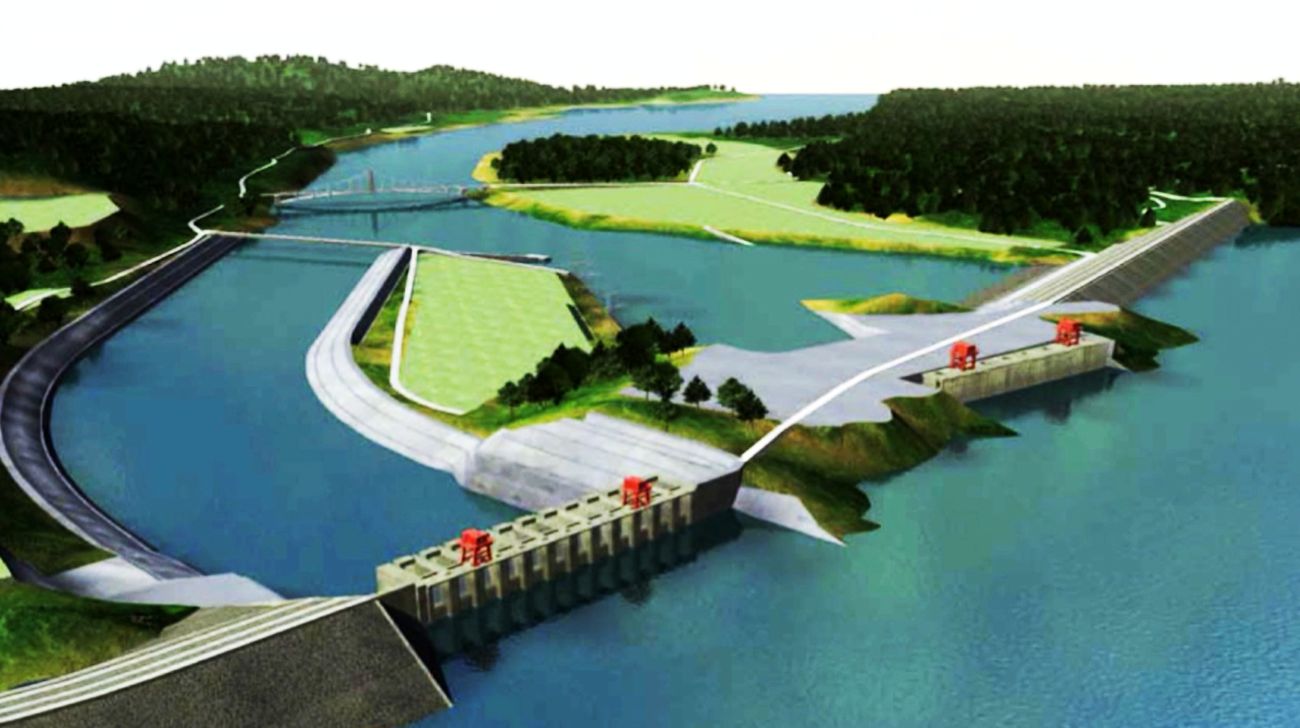
Questions are being raised within economic and political circles regarding how much the public will actually benefit from the Myitsone Dam project, which is set to be revived under a bilateral agreement between the Chinese and Myanmar governments.
The Myitsone project in Kachin State, Myanmar, was originally signed under an agreement between Chinese President Xi Jinping and Senior General U Than Shwe, with completion targeted for 2017.
However, on September 30, 2011, the U Thein Sein-led government announced a temporary suspension of the project from 2011 to 2016. It subsequently remained stalled through the NLD government's tenure (2016–2020) and through the period of 2021 to 2025.
Following the emergence of the administration led by U Min Aung Hlaing, an agreement to resume the Myitsone project was reached during his visit to China from July 15 to 19, 2026, where he held talks with Chinese President Xi Jinping.
During President U Min Aung Hlaing's trip to China, it was agreed that the Myitsone project would be fully constructed within 10 years.
However, Kachin State Chief Minister U Khet Htein Nan, who accompanied the delegation during the China trip, stated that construction could be completed in about eight and a half years.
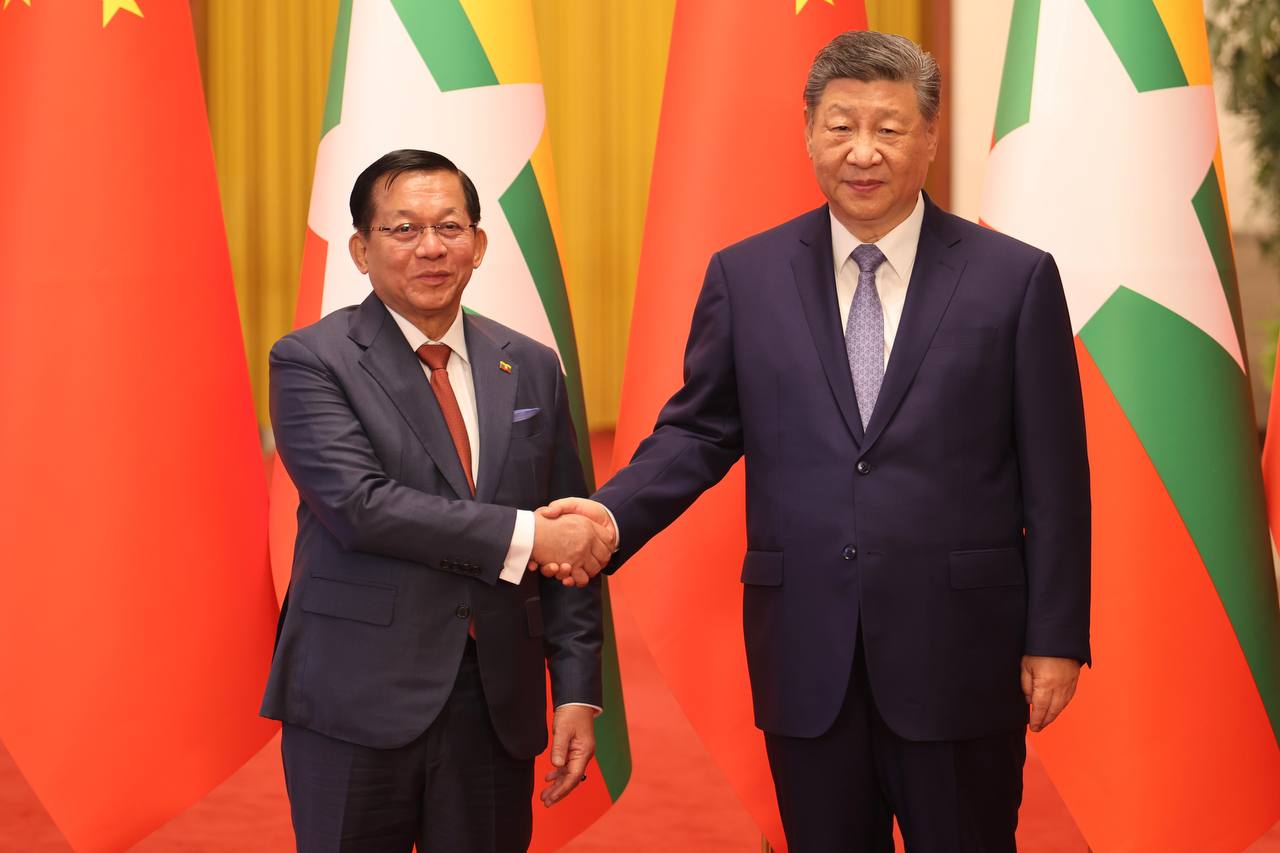
Myanmar President U Min Aung Hlaing meeting with Chinese President Xi Jinping.
Political analyst U Htet Aung Kyaw told CNI News that Myanmar needs to carefully calculate whether it can afford to buy back and consume electricity if it has to be purchased through the Yunnan Provincial Government.
U Htet Aung Kyaw stated: "We need to think about who will buy the electricity once the Myitsone Dam is built. Will Yunnan Province in China still buy it? Or will Yunnan say, 'Our energy needs are already met, you guys buy it'? We have to consider these scenarios. If they don't need it and try to sell it back to us, we must evaluate whether we even have the financial capacity to buy it."
Economic and political analysts point out that the Myitsone project was originally intended to supply electricity to China's Yunnan Province, with Myanmar slated to receive only 10% of the generated power.
However, because Yunnan Province currently has a sufficient power supply, a situation could arise where Myanmar is forced to buy back the electricity generated from its own Myitsone project through Yunnan Province.
The Ayeyarwady Myitsone project comprises seven distinct project sites. Each site—including Myitsone, Myitnya, and the wider basin development—is projected to generate 5,600 megawatts (MW) of electricity.
Dr. Khaing Khaing Soe, spokesperson for the President's Office, stated during a press conference on June 30, 2026, that Myanmar's nationwide electricity demand stands at over 10,000 MW.
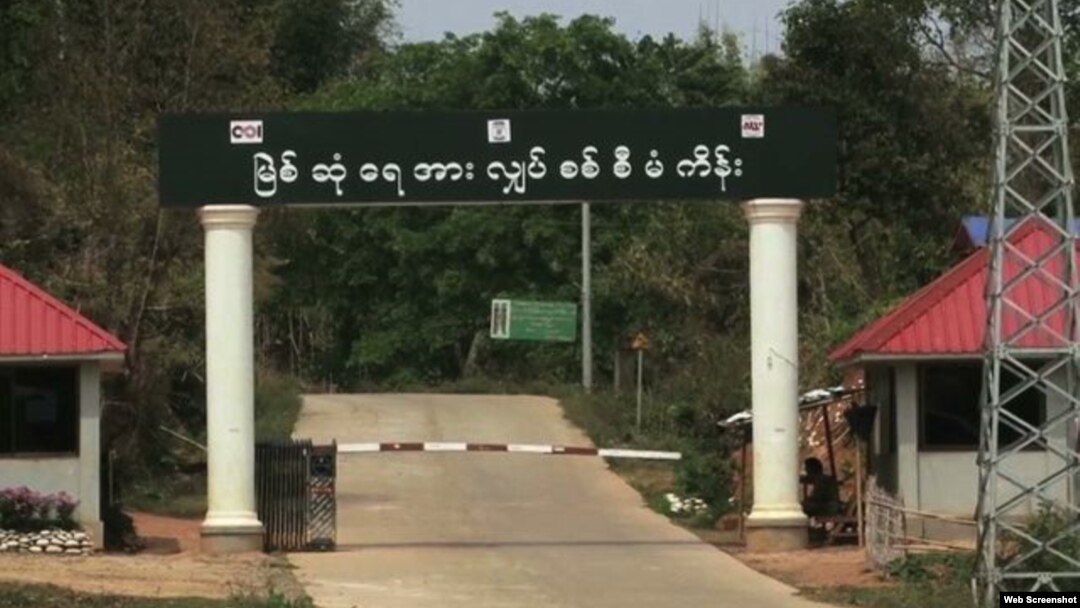
A view of the Myitsone project area.
Because each individual site of the Myitsone project can produce 5,600 MW, the project would not only light up the entire country but also generate a surplus.
Khun Tu, a local resident from Myitkyina in Kachin State, told CNI News that the country must consider how Myanmar's natural resources will be destroyed while China reaps the primary benefits.
Khun Tu stated: "It would be one thing if our citizens could enjoy brightly lit, affordable electricity. But if it isn't cheap, and China takes our resources only for us to buy them back, it looks like we are just selling off our raw materials. We have to consider whether the people of Myanmar will truly enjoy the benefits or if the Chinese will benefit more. Furthermore, if there is destruction, it is our country's natural resources and environment that will be ruined."
Public anxiety remains high regarding potential flooding along the Ayeyarwady river basin and environmental degradation caused by the Myitsone construction.
Because nearly all the produced electricity was originally slated to be exported to China for a 50-year period, the project triggered intense controversies and public protests under successive previous governments.
According to civil society organizations and local residents, five villages in Kachin State have already been forced to relocate due to the Myitsone project, and more than 40 additional villages face relocation in the future.