
CNI News
3 July 2026
Military and political analysts told CNI News that Myanmar's ongoing peace process remains far out of reach due to underlying vested interests.
Following its independence on January 4, 1948, Myanmar plunged into a civil war in March of the same year—a conflict that continues to this day. Throughout successive eras, successive governments, the military, and Ethnic Armed Organizations (EAOs) have held peace talks, yet a resolution remains elusive.
Despite various peace efforts, the process faces persistent delays because stakeholders frequently prioritize personal and regional interests rather than focusing on the well-being of the nation and its public.Interests
Saw Khun Kyaw Win, a spokesperson for the Pa-O National Organization (PNO), told CNI News that while Myanmar has extensive experience with peace processes, underlying interests continue to keep peace at a distance.
"Mainly, the responsible leaders need to have mutual understanding and transparency," he said. "Furthermore, every leader—whether from the government or the ethnic sides—needs to look at the face of the country. If they consider what should be done for a better future for the nation, rather than focusing on the interests of a single organization or a single region, it is achievable."
Myanmar President U Min Aung Hlaing
He added: "In my view, we have accumulated a wealth of experience regarding peace since the administration of President U Thein Sein. We have experience cooperating with organizations and studying abroad. Both the government and ethnic leaders already know this. If leaders think of the country to move forward, the answer is not far off. But if they don't think of the nation and personal interests remain involved behind the scenes, peace will continue to be distant."
Currently, President U Min Aung Hlaing is implementing a 100-day plan to carry out peace initiatives and has invited ethnic armed organizations to engage in talks by a July 31 deadline.
Political analyst U Htet Aung Kyaw told CNI News that because successful outcomes failed to emerge under successive governments, it is necessary to abandon historical methods and consider entirely new approaches.
"Successive governments have tried various models of peace processes," he noted. "Some involved negotiating by granting economic concessions, among other methods. None of them worked out smoothly. Looking on the bright side, we now know which methods do not work. The key is to find what does work. If we keep repeating past mistakes, we will only get the same results."

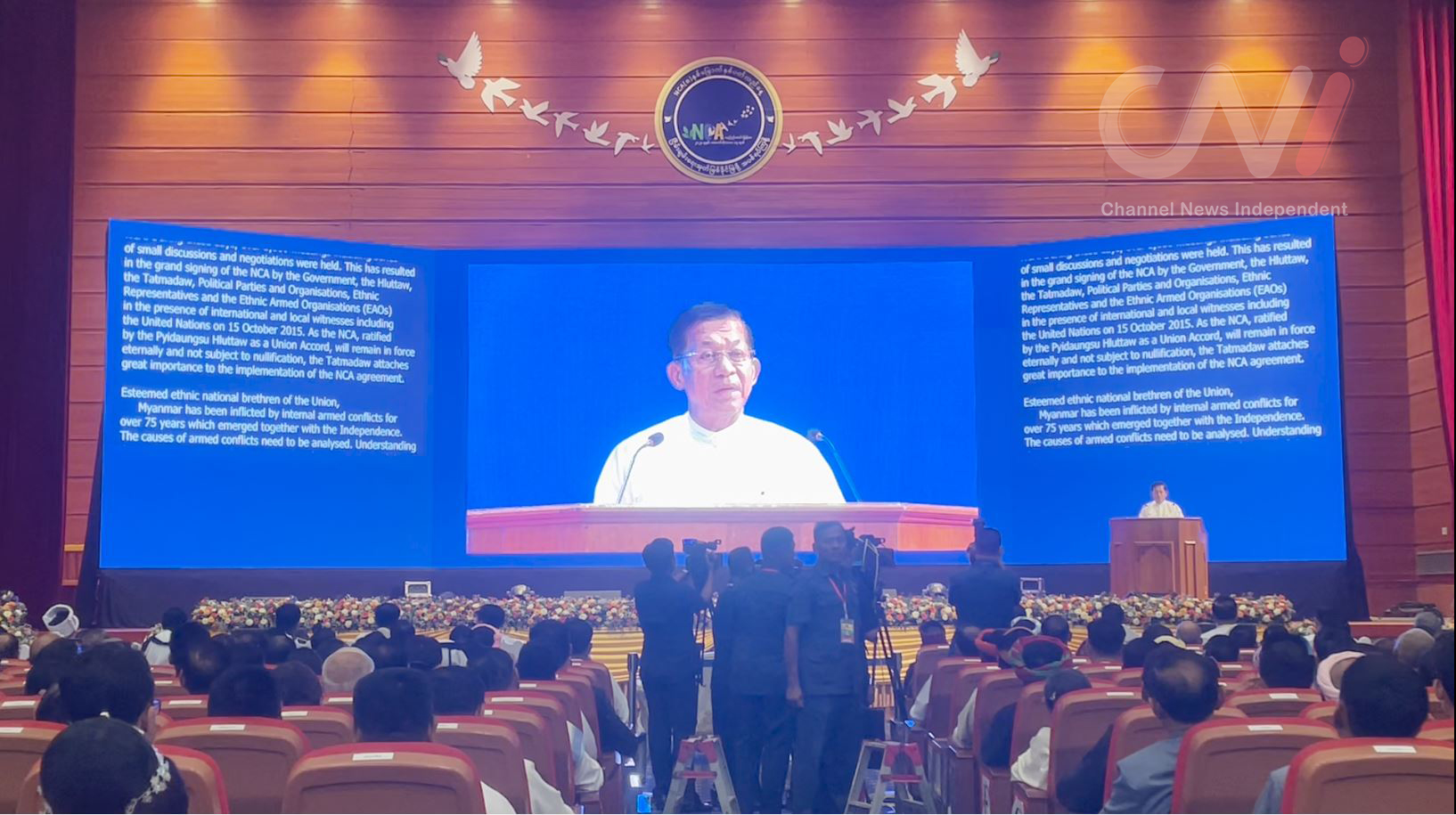
Attendees at the NCA annual ceremony
"Therefore, we need to thoroughly consider new methodologies regarding peace. When doing so, rather than one individual deciding on an approach and testing it alone, it would be much more appropriate to consult and develop a system that everyone can accept. Peace does not belong to just one person; it concerns everyone and is everyone's right. The crucial element is how to create a framework that demonstrates this outcome is the result of collective collaboration."
Recently, the NSPNC (National Solidarity and Peacemaking Negotiation Committee) has held a series of meetings:
June 4: Met with the Shanni Nationalities Army (SNA), June 9–10: Met with the 7 EAO Alliance (NCA signatories), June 12: Met with the Shan State Progress Party (SSPP).
June 17: Met with the National Democratic Alliance Army (NDAA), June 18: Met with the United Wa State Army (UWSA).
Despite these talks, military and political analysts point out that the peace process remains stalled because the government, the military, and EAOs face conflicting interests regarding power-sharing, administrative division, and the allocation of natural resources and finances.